Understanding the Past to Respond to the Present: International Academic Conference Marking the Centennial of the German Diocese of ROCOR Held in Munich
 A jubilee academic and ecclesiastical conference marking the 100th anniversary of the German Diocese of the Russian Orthodox Church Outside of Russia (ROCOR) was held in Munich. The forum was not only a commemoration of a significant milestone but also a serious attempt to reflect on the historical path of the diocese—from the first Russian émigré communities to the contemporary multilingual and missionary life of Orthodoxy in Germany. A jubilee academic and ecclesiastical conference marking the 100th anniversary of the German Diocese of the Russian Orthodox Church Outside of Russia (ROCOR) was held in Munich. The forum was not only a commemoration of a significant milestone but also a serious attempt to reflect on the historical path of the diocese—from the first Russian émigré communities to the contemporary multilingual and missionary life of Orthodoxy in Germany.
The central theme of the conference was reflection on the past, present, and future of the German Diocese. Even the proposed anniversary mottos—“Milestones of a Century: Reflecting on the Historical Path,” “The Light of Faith: History and Modernity,” and “History, Present, and Future of the German Diocese”—expressed the common vision of the gathering: to unite historical memory with ecclesiastical self-understanding and reflection on the place of Orthodoxy in contemporary Western society.
May 6
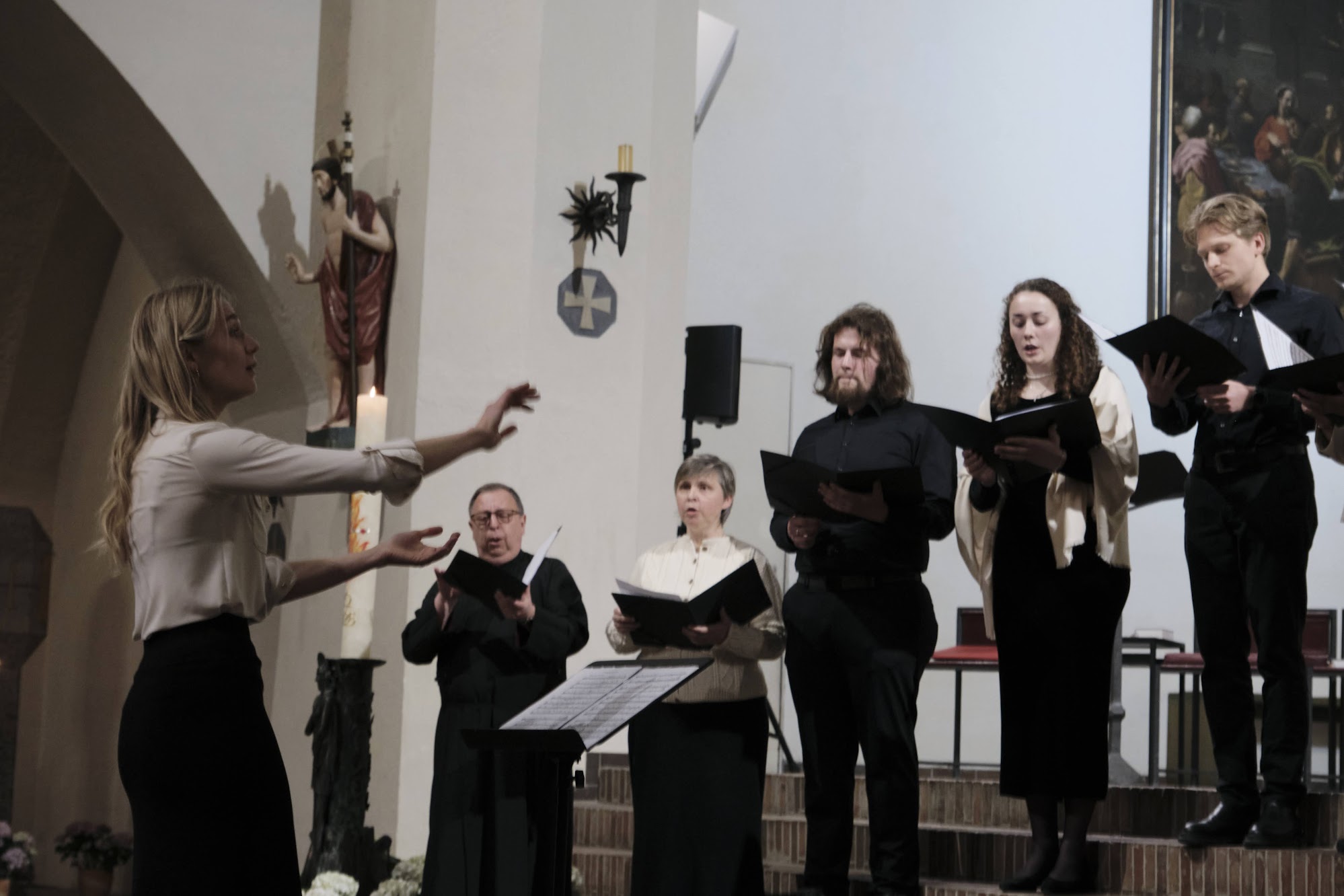
The conference opened with a concert by the choir of the Cathedral of the Holy New Martyrs and Confessors of Russia and St. Nicholas, conducted by its longtime director Vladimir V. Tsiolkovich. Participants were welcomed by the cathedral dean, Mitred Archpriest Nikolai Artemoff.
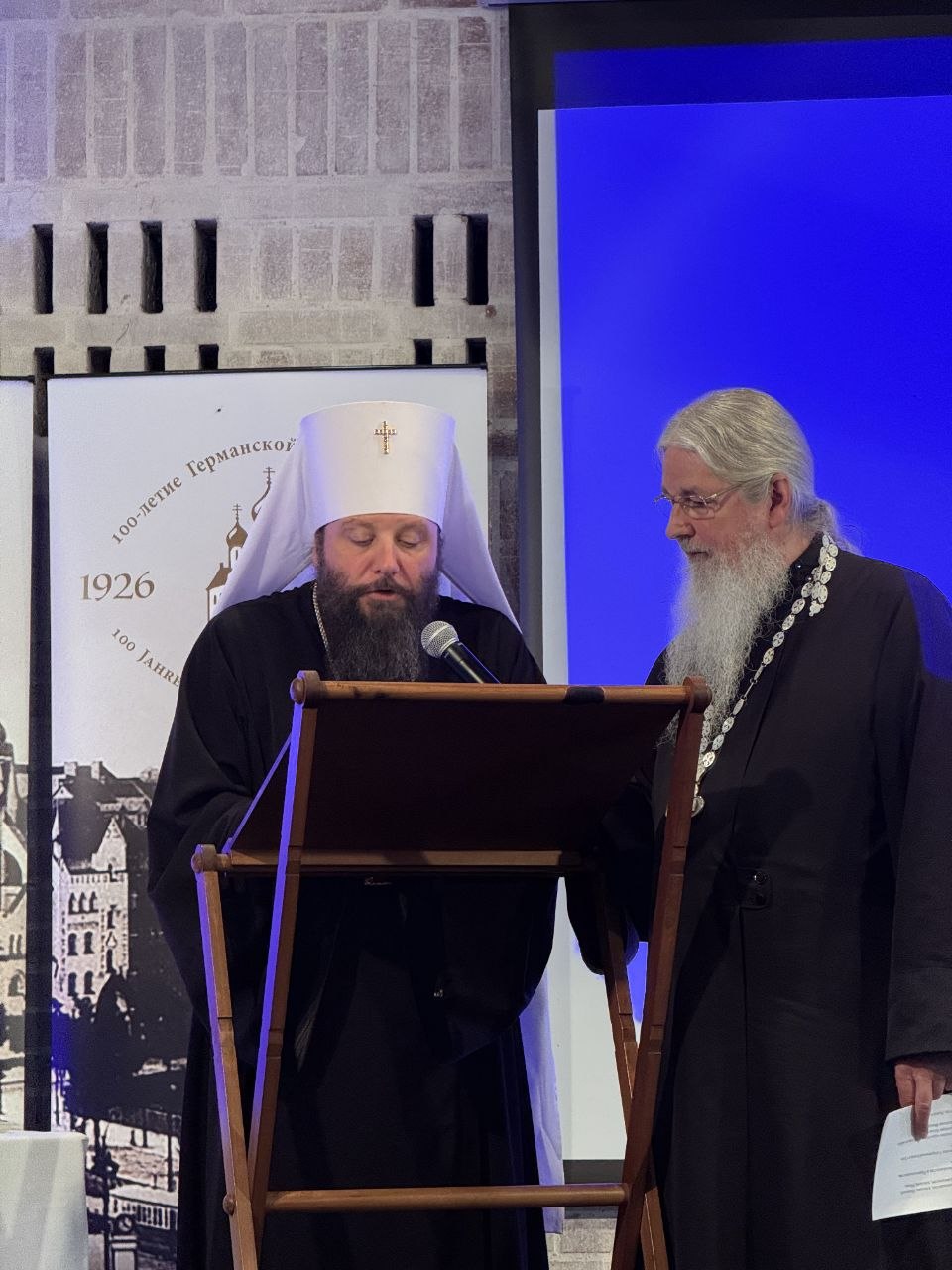
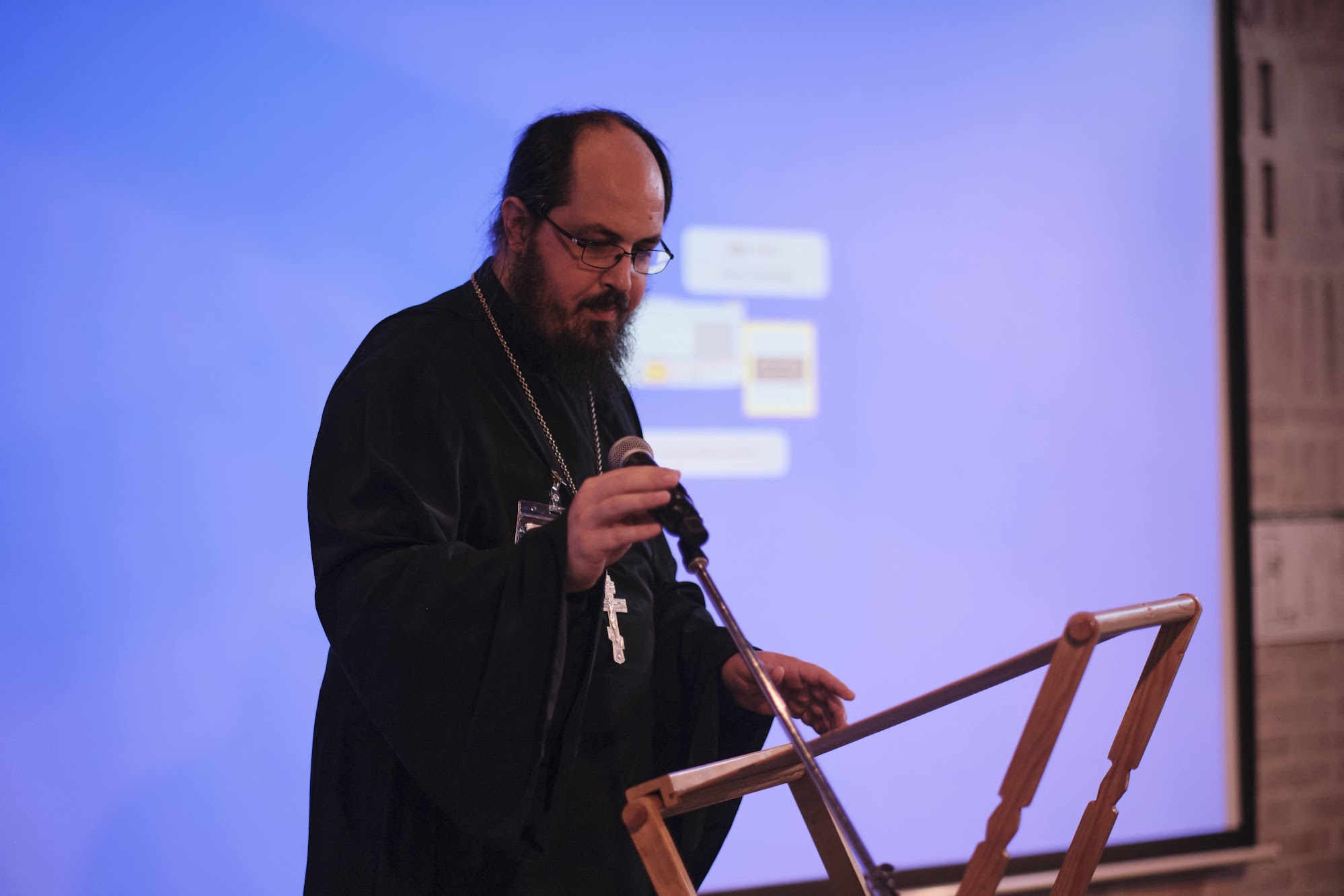
The forum was then officially opened by the First Hierarch of the Russian Orthodox Church Outside of Russia, His Eminence Metropolitan Nicholas of Eastern America and New York. In his address, he emphasized that the century-long history of the German Diocese stands as a testimony to fidelity to God and the Church preserved by the Russian emigration in conditions of exile and dispersion. According to the First Hierarch, the task of the conference was not only to remember this achievement but also to strengthen living faith, brotherly unity, and ecclesiastical communion.
His Eminence Metropolitan Mark of Berlin and Germany noted that the Russian Church Abroad has never understood itself as an exclusively national institution. “ROCOR is not narrowly national, but a Church that transcends all boundaries,” he stressed. He also drew attention to the deep roots of Orthodoxy within German society and culture, reminding participants of the importance of prayer and participation in the divine services as the foundation of church life.
A greeting from Metropolitan Serafim of the Romanian Orthodox Church in Germany was delivered by his vicar, Bishop Sofian. The message emphasized the special role of the Russian Church Abroad in preserving the Orthodox tradition in Europe and highlighted the importance of inter-Orthodox cooperation.
One of the important features of the conference was its effort to present the history of the German Diocese not as an isolated internal chronicle but as part of the broader processes of the twentieth century: Russian emigration, ecclesiastical dispersion, war, totalitarian regimes, postwar reconstruction, relations with the state, and the gradual overcoming of church divisions.
A special place in the first day’s program was occupied by the historical overview presented by Archpriest Nikolai Artemoff, dean of the Munich cathedral. His presentation combined church history with personal memory. He traced the path from the barrack churches and émigré parishes of the postwar period to the formation of new communities, the resettlement of Russian Germans, the expansion of German-language church ministry, and ultimately the restoration of ecclesiastical unity within the Russian Church.
By combining archival materials with living testimony, the presentation allowed participants to see the history of the diocese not merely as a sequence of dates and decisions, but as the story of real people, parishes, and generations.
The keynote address of the conference was delivered by Bishop Job of Stuttgart. The central theme of his presentation was the mission of ROCOR in Germany and the question of Orthodox identity in Western society. He posed a fundamental question: would Orthodoxy in Germany remain a “foreign body,” or would it finally become firmly rooted in the life of the country?
Bishop Job firmly rejected the notion that Orthodoxy is merely a temporary or exclusively émigré phenomenon. He recalled the development of the Orthodox tradition in Germany already in the nineteenth century—the beauty of Russian churches, the translations of liturgical texts into German prepared by Archpriest Alexei Maltsev, and above all the people through whom Orthodoxy became a living spiritual reality within German society.
Thus, the history of the German Diocese was presented not as a story of isolation but as a history of the gradual rooting of the Orthodox tradition within Germany’s cultural and religious environment. One of the central ideas of the presentation was that the century-long endurance of the German Diocese should be understood not merely as the result of human effort but as a manifestation of Divine Providence. Despite political upheavals, external pressures, and internal conflicts, the work of the Russian Orthodox Church in Germany remained directed toward one goal: to be the Church of Christ and the bearer of the millennial Orthodox tradition.
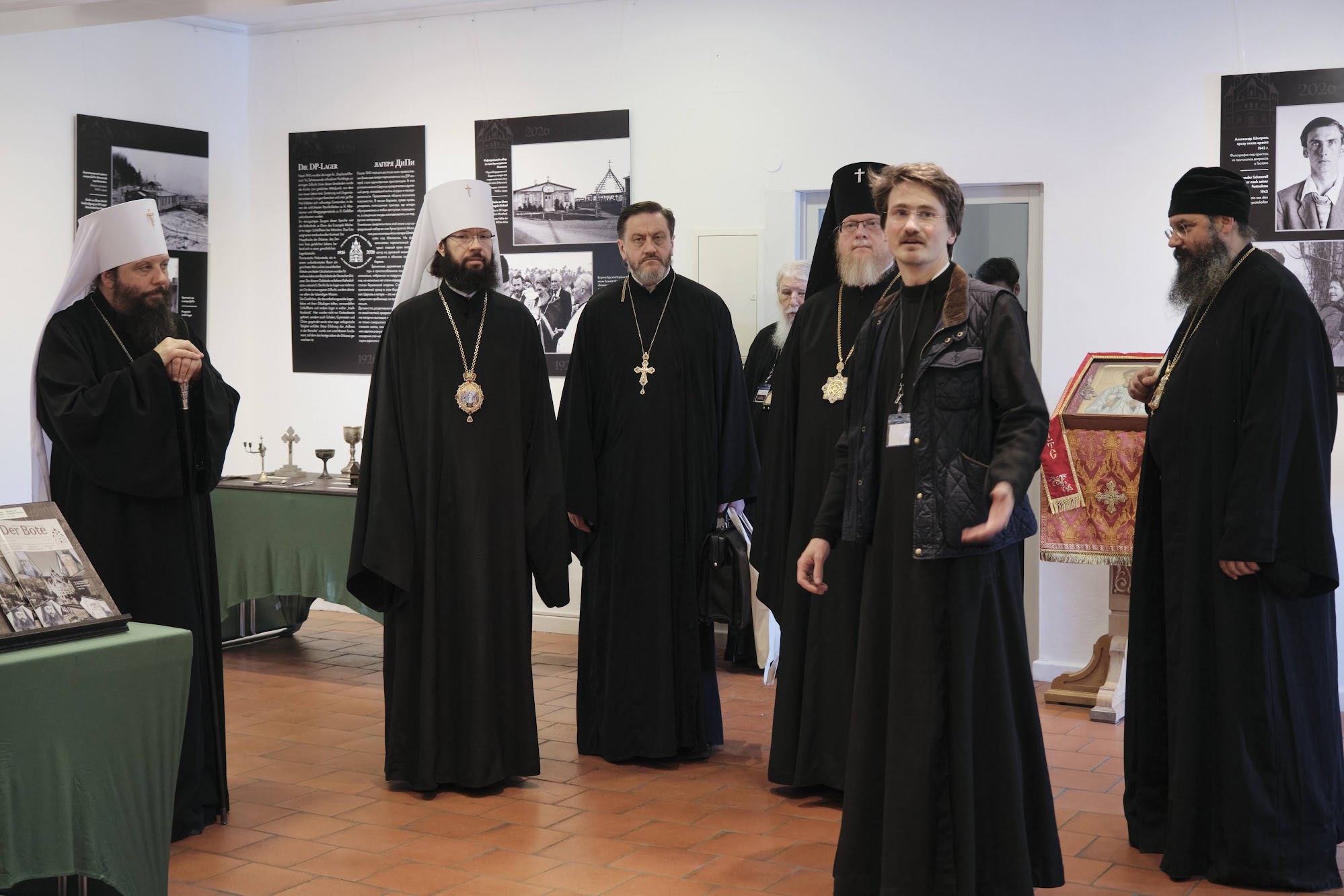
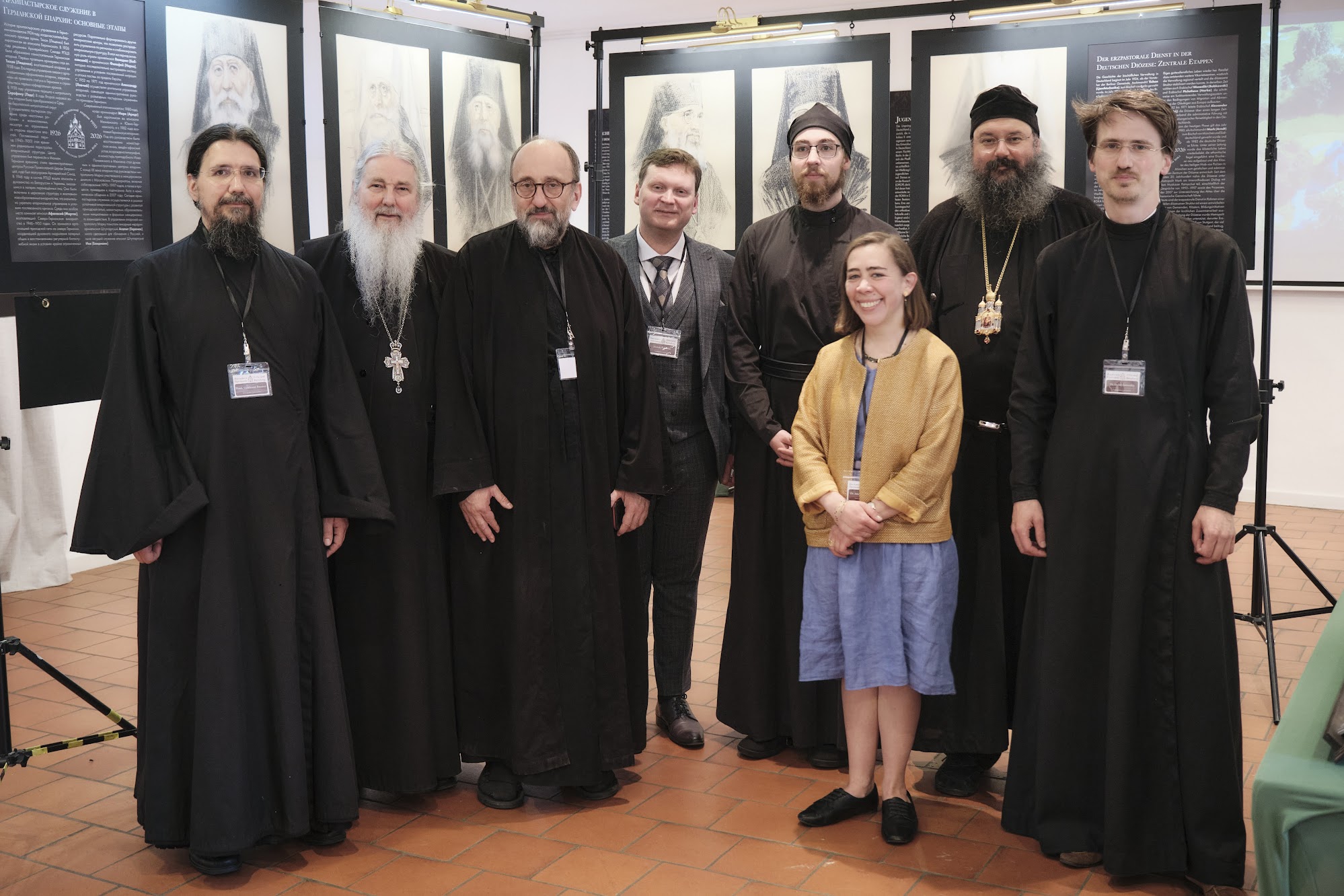
An exhibition devoted to the history of the diocese was also opened on the first day. Archival photographs, documents, and materials from parish life allowed participants to trace the Church’s journey through war, emigration, divided Germany, and the modern era.
The exhibition served as a visual continuation of the presentations, reminding visitors that church history is preserved not only in official documents but also in faces, liturgical books, parish photographs, letters, memoirs, and humble testimonies of everyday faithfulness. The exhibition was curated by Reader Andrei Fastovsky.
May 7
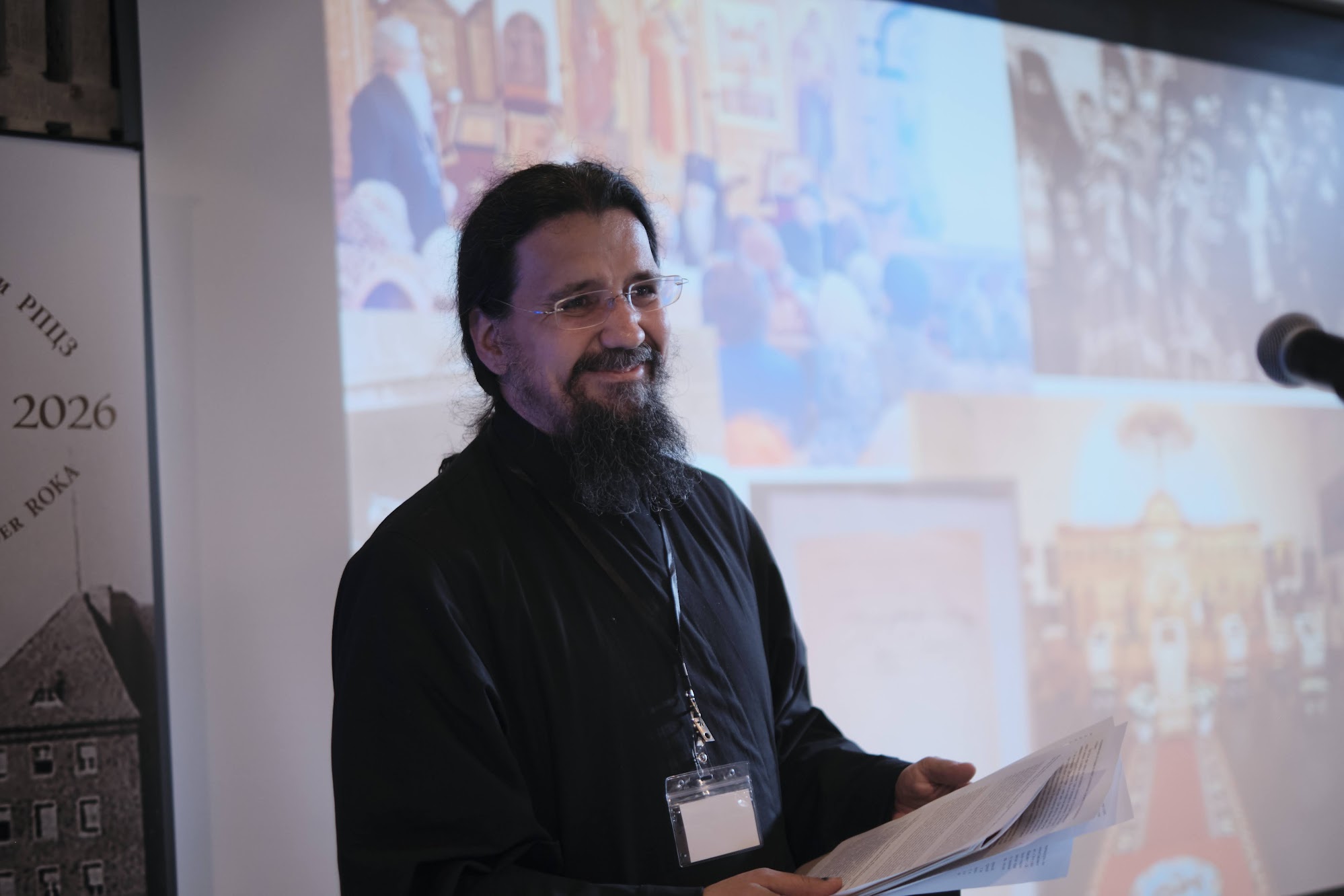
The second day of the conference was devoted to historical papers and discussions. As noted by one of the organizers, Protodeacon Andrei Psarev, Professor of Russian Church History and Canon Law at Holy Trinity Seminary in Jordanville, New York, preparation for the conference had taken nearly a year. He emphasized that the study of twentieth-century church history requires both scholarly responsibility and ecclesiastical sensitivity. History, he argued, must become neither ideology nor myth but remain a space for honest ecclesiastical reflection on the past.
In his presentation, Fr. Andrei described the German Diocese of ROCOR not merely as a geographical territory but as an important center of church memory, historical dialogue, and the restoration of communion between the Russian Orthodox Church Outside of Russia and the Moscow Patriarchate. He stressed that the history of the Russian Church in the twentieth century includes experiences of suffering, exile, compromise, fidelity, and the providential preservation of the Church, and therefore demands a balanced and responsible approach. His address set the tone for many of the presentations and discussions that followed.
According to Protodeacon Andrei Psarev, conferences of this kind represent a form of conciliar service to church memory. They help overcome double standards, take into account differing historical narratives, and deepen understanding of contemporary ROCOR through a responsible engagement with its complex past.
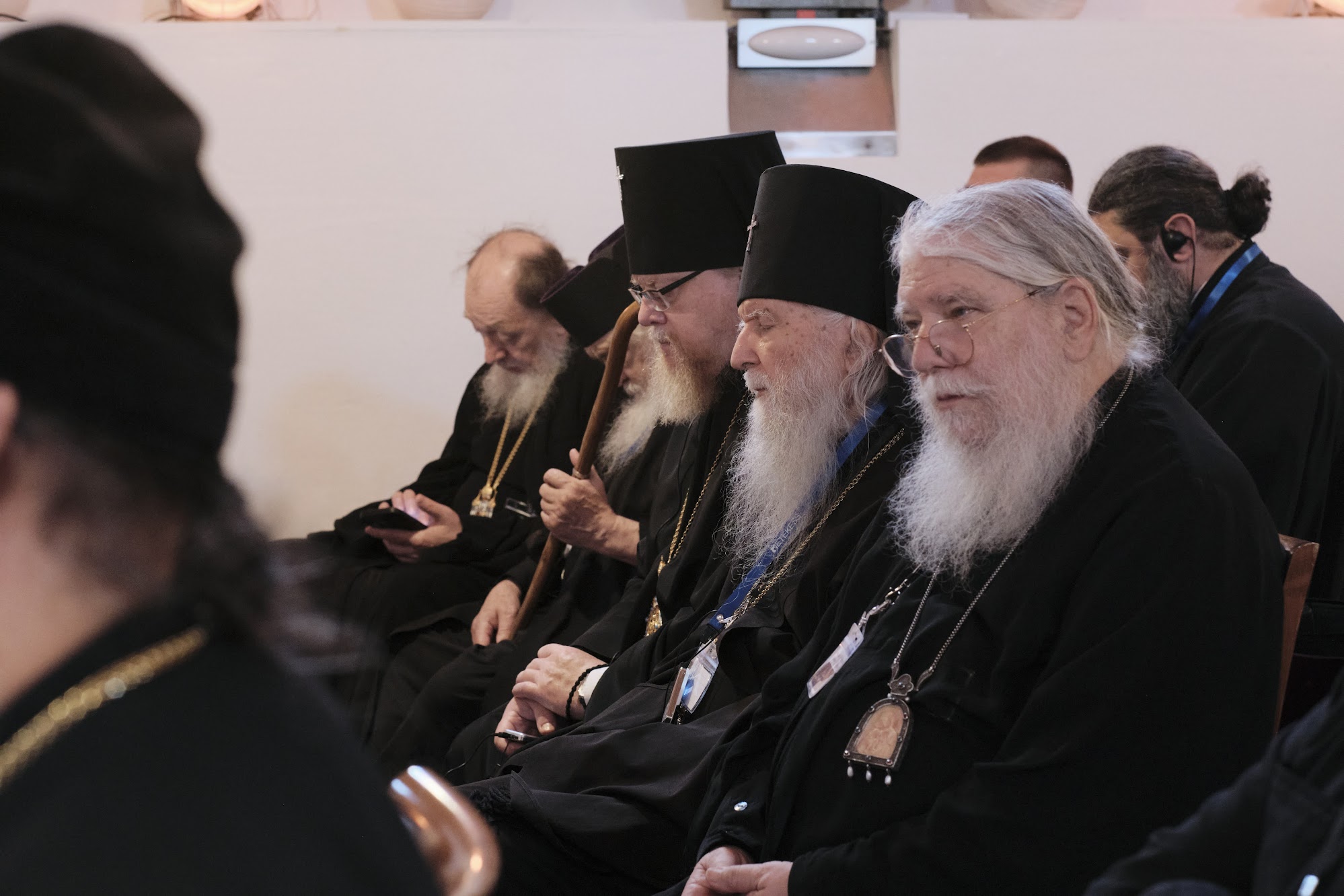
Among the guests were Archbishop Tikhon of Ruza, Administrator of the Berlin-German Diocese of the Moscow Patriarchate, together with several clergy of the Moscow Patriarchate who actively participated in the discussions. Archbishop Tikhon emphasized the importance of such gatherings as opportunities for genuine communication, mutual listening, and shared ecclesiastical reflection. Metropolitan Anthony of Volokolamsk, Chairman of the Department for External Church Relations of the Moscow Patriarchate, also took part in the second day’s proceedings.
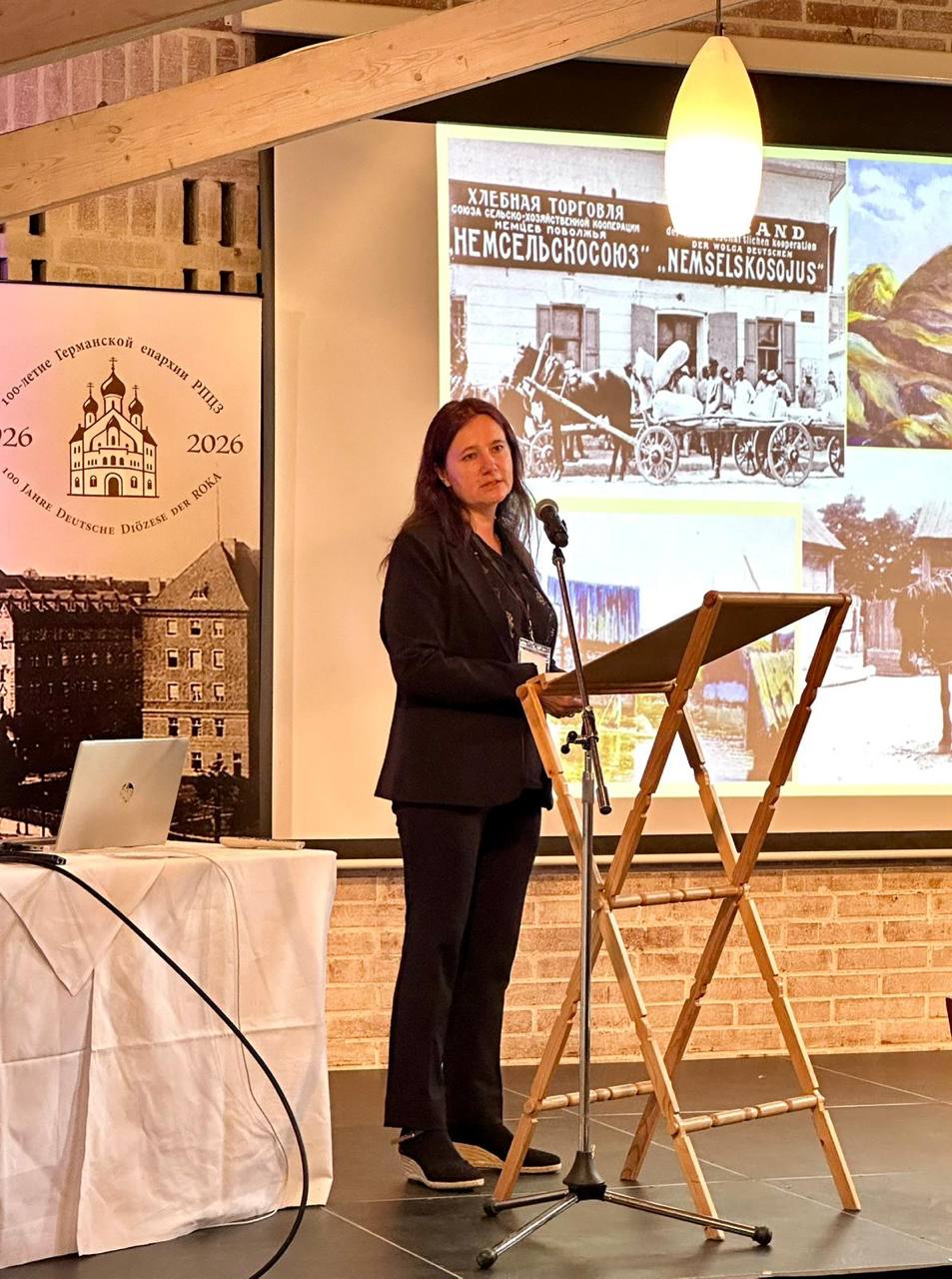
The second speaker was Dr. Scott Kenworthy, Professor of Comparative Religion at Miami University in Oxford, Ohio. Professor Kenworthy analyzed the relationship between Patriarch Tikhon and the Russian Church Abroad, arguing that a key source of tension lay in differing understandings of ROCOR’s status. Metropolitan Anthony (Khrapovitsky) regarded ROCOR as the ecclesiastical authority for the entire Russian Church outside Soviet Russia, whereas Patriarch Tikhon understood it primarily as a temporary structure for the pastoral care of Russian refugees and émigrés.
According to Dr. Kenworthy, a second major point of disagreement concerned the Church’s relationship to politics. Patriarch Tikhon consistently sought to prevent the Church from issuing political declarations, whereas the leadership of the Russian Church Abroad, particularly after the Karlovci Council and its appeal to the Genoa Conference, adopted openly anti-Soviet and monarchist positions.
The speaker emphasized that the subsequent conflict between Metropolitans Evlogy (Georgievsky) and Anthony was not simply the result of personal disagreements but rather a consequence of the tragic circumstances of revolution, emigration, broken communications, and incompatible ecclesiastical and political strategies.
The origins of the German Diocese of ROCOR were examined in a major presentation by Professor Andrei A. Kostryukov, Doctor of Historical Sciences, Candidate of Theology, and Professor at St. Tikhon’s Orthodox University for the Humanities in Moscow. He presented the establishment of the German Diocese as part of the broader and more complex relationship between the Synod of Bishops of ROCOR and Metropolitan Evlogy, who had originally been appointed to oversee the Russian parishes of Western Europe but gradually distanced himself from the Synod.
The paper demonstrated that the creation of the Berlin Vicariate in 1924 under Bishop Tikhon (Lyashchenko), and its subsequent transformation into an independent German Diocese, took place amid disputes over canonical authority, the autonomy of the Western European District, and the limits of Metropolitan Evlogy’s authority. Professor Kostryukov paid particular attention to the fact that attempts by the ROCOR Council of Bishops to limit Metropolitan Evlogy’s autonomy in the interest of church unity failed to achieve lasting reconciliation, while the death of Patriarch Tikhon further deepened the estrangement between Metropolitan Evlogy and the Synod Abroad.
An important section of the conference focused on the emergence and development of the German Diocese during the interwar period. The speakers demonstrated that the formation of an independent ROCOR ecclesiastical structure in Germany resulted not from an abstract administrative scheme or a predetermined political program, but from a concrete crisis of church governance, the conflict surrounding Metropolitan Evlogy, and the practical necessity of organizing stable church life within German society.
Thus, the history of the diocese emerged as the history of the Church’s response to the extraordinary circumstances of emigration, when the preservation of canonical order, liturgical life, and pastoral responsibility required new organizational solutions.
Considerable attention was devoted to the role of Russian monarchist circles in Germany during the 1920s. In his presentation, Professor Andrei A. Ivanov of St. Petersburg State University demonstrated that the Supreme Monarchist Council regarded the Orthodox Church as the spiritual foundation for the future restoration of the Russian monarchy. The Bad Reichengall Congress reinforced the notion of an inseparable connection between autocracy, the Orthodox faith, and the revival of Russia.
Professor Ivanov also highlighted the active involvement of Russian monarchists in the ecclesiastical life of the emigration. They supported the Berlin parish, Archimandrite—and later Bishop—Tikhon (Lyashchenko), the construction of the Resurrection Cathedral, and the strengthening of church institutions associated with the ROCOR Synod of Bishops.
A substantial portion of the discussions focused on the National Socialist period. Several presentations explored the difficult position of the Russian ecclesiastical emigration in Germany during the 1930s and 1940s, its relationship with the authorities of the Third Reich, and the moral and ecclesiastical challenges faced by Orthodox Christians living under a totalitarian ideology.
These presentations were notable for avoiding simplistic interpretations. Instead, they demonstrated the tension between the desire to preserve church life, the realities of political circumstances, and the personal responsibility of Christians before God and conscience.
In his paper, Dr. Dirk Schuster, Associate Professor of Religious Studies at the University of Vienna, argued that the Nazi regime generally tolerated the German Diocese of ROCOR so long as it was not perceived as an ideological opponent and could fulfill a limited political role within the Russian émigré community. At the same time, the regime was unwilling to permit the Church to expand its influence significantly.
Such presentations by non-confessional scholars were especially valuable because they are less susceptible to accusations of ecclesiastical bias.
Particular interest was generated by Archpriest Nikolai Artemoff’s presentation on the Holy Martyr Alexander Schmorell and the White Rose resistance movement. Through Schmorell’s life, the speaker explored themes of Christian freedom, spiritual resistance, and fidelity to conscience under a regime that sought total domination over the human person.
The figure of St. Alexander Schmorell was presented not merely as a historical example but as a theological witness. Membership in the Church, Fr. Nikolai argued, cannot be reduced to cultural memory or external identity; it requires a willingness to make moral choices and bear witness to the truth.
Equally significant was the section devoted to the postwar period and the displaced persons (DP) camps. The speakers demonstrated that church life in the DP camps was not merely a source of spiritual consolation or a means of preserving familiar traditions. Rather, it became a space for restoring a sense of normality to shattered human and communal lives.
Within barrack churches, temporary chapels, parish schools, and brotherhoods, a distinctive ecclesiastical environment emerged in which memories of the lost homeland were combined with a new sense of responsibility. Under these circumstances, the parish became not only a place of worship but also a center of education, mutual assistance, preservation of language and culture, and the maintenance of Orthodox identity.
A paper by St. Petersburg researcher Ivan V. Petrov, entitled “Repatriation and the Resistance to It by the German Diocese,” examined the role of the German Diocese of ROCOR and its clergy in the fate of displaced persons after the Second World War, especially those threatened with forced repatriation to the Soviet Union under Allied agreements.
Particular attention was given to the pastoral, organizational, and humanitarian efforts of Archimandrite Nathanael (L’vov), Hieromonk Vitaly (Ustinov), and other representatives of the Russian Church Abroad. Through negotiations with British and American authorities, the registration of parishes, and the establishment of camps, schools, and church institutions, they sought to protect Russian refugees from forced return.
Professor Alexander A. Kornilov of Nizhny Novgorod presented a paper on “The Activities of the Clergy of the German Diocese of ROCOR, 1945–1951.” He demonstrated how, amid postwar devastation, displaced persons camps, and mass emigration, the clergy created stable church structures, organized parish life, and provided pastoral care to the faithful.
Special attention was devoted to Metropolitan Seraphim (Lade), under whom a collegial system of diocesan administration was established; Bishop Athanasy (Martos), who developed theological education, clergy conferences, and spiritual retreats; and Archpriest Mitrophan Znosko, whose ministry in the Menhegof camp combined liturgical service, teaching, charitable assistance, and care for the sick.
The clergy of the German Diocese not only sustained the religious life of Russian refugees but also helped them endure spiritually amid exile, poverty, and uncertainty, transforming the parish community into a place of prayer, education, mutual support, and hope.
Several presentations addressed the legal status of the German Diocese, its relations with German governmental authorities, other Orthodox jurisdictions, and the Moscow Patriarchate. These discussions raised not only administrative and canonical questions but also broader issues of ecclesiastical identity: how ROCOR remained faithful to its historical memory while remaining open to pastoral ministry in a new country and among new generations.
A presentation by Archpriest Alexander Slesarev, Vice-Rector for Research at the Minsk Theological Academy, examined the incorporation of Belarusian and Ukrainian bishops into ROCOR after the Second World War. He demonstrated that the German Diocese became the principal arena of their integration, as these hierarchs received vicariate appointments and became involved in the pastoral care of displaced persons.
Despite later divisions within the Belarusian and Ukrainian diasporas, their ministry significantly strengthened the German Diocese, expanded its pastoral capabilities, and helped make it one of the principal centers of multinational Orthodox life in postwar Europe.
The final presentation of the day was delivered by Protodeacon Varfolomey Bazanov of the German Diocese. His paper examined the history of St. Nicholas Parish in Munich, portraying it not merely as an administrative unit but as a living social environment in which Russian émigrés formed a stable and enduring community.
Drawing on both archival documentation and sociological research, the speaker demonstrated that the parish fulfilled functions extending far beyond the celebration of divine services. It became a place of survival, trust, preservation of Orthodox faith, Russian language, family memory, mutual assistance, and the upbringing of children.
The paper emphasized that the history of the parish was not simply the history of statutes, rectors, and parish councils. Above all, it was the history of people—their fears, hopes, homes, feasts, prayers, and efforts to preserve continuity between generations of the Russian Orthodox diaspora in Munich.
With this presentation and the discussions that followed, the second day of the conference officially concluded.
A special event that evening was a concert of Russian émigré church music performed by singers from St. Nicholas Parish in Stuttgart. The concert took place in the Catholic Church of Leiden Christi and attracted both conference participants and residents of Munich.
The works of twentieth-century Russian émigré composers created an atmosphere of spiritual remembrance and cultural continuity. Organized by the Pan-European Church Music Committee, the concert served as a reminder that the history of the Russian Church Abroad was expressed not only through administrative decisions and historical events, but also through prayer, sacred music, the beauty of worship, and the preservation of ecclesiastical tradition.
May 8
The third and final day of the conference continued the historical discussions while also turning attention toward future challenges facing the German Diocese. If the first two days were devoted primarily to memory and historical experience, the final day focused on how that heritage might be transmitted to future generations.
The day opened with a presentation by one of the conference organizers, Anatoly V. Kinstler, archivist of the German Diocese. His paper examined the legal status and institutional development of the German Diocese of ROCOR between 1945 and 1951. He demonstrated that the postwar survival of the diocese depended in large measure upon the preservation and reaffirmation of its status as a public-law corporation, a status rooted in the legal traditions of the Weimar Constitution.
Particular attention was given to the efforts of Metropolitan Seraphim (Lade) and later Archbishop Benedict (Bobkovsky) to secure recognition of this status in various German states while simultaneously creating a new administrative structure through diocesan administrations, vicariates, deaneries, and a diocesan-synodal system of governance.
The speaker emphasized that legal recognition was not merely a formality but a practical resource for church life. It strengthened relations with state authorities, supported missionary, publishing, and educational work, and helped preserve diocesan unity amid postwar fragmentation, population displacement, and the relocation of the Synod of Bishops to America.
Archpriest Dimitry Svistov, a diocesan clergy, addressed a particularly difficult historical topic: the interpretation of the law of February 25, 1938, concerning the property holdings of the Russian Orthodox Church in Germany. Fr. Dimitry demonstrated that although the law originated within the legal framework of the Third Reich, courts in the Federal Republic of Germany did not regard it as ideologically Nazi legislation or as legally invalid.
Special attention was devoted to the role that the 1938 law and subsequent rulings assigning church property to the German Diocese of ROCOR played in legal disputes among ROCOR, the Moscow Patriarchate, and the Paris Archdiocese, particularly concerning church properties in Bad Ems and Baden-Baden.
The speaker stressed, however, that the true cause of these property disputes was not the law itself but the deeper ecclesiastical divisions within the Russian diaspora. The overcoming of those divisions became possible only after the Act of Canonical Communion of 2007, although the complete healing of earlier estrangement remains an ongoing task.
These issues were explored further in a paper by Archpriest Nikolai Artemoff entitled “The Involvement of the German Diocese in Parallel ROCOR Structures in the Soviet and Post-Soviet Space (1974–1994).” Fr. Nikolai himself participated in negotiations between representatives of the Moscow Patriarchate and the Russian Church Abroad in Germany during the years 1993–1997.
Reader Andrei Fastovsky devoted his presentation to the history and significance of those negotiations, portraying them as an important stage in overcoming ecclesiastical division. Initiated by Archbishop Mark at a time when church-wide dialogue remained extremely difficult, these meetings addressed not only historical and canonical questions—particularly ecumenism and Sergianism—but also practical pastoral issues affecting church life in Germany.
Topics included the administration of the sacraments, translations of liturgical texts, transfers of clergy between jurisdictions, and the development of a common language for addressing the faithful. Despite unresolved tensions and the subsequent crisis of 1997, these German meetings provided an important experience of responsible church dialogue and helped prepare the way for later conferences, official negotiations, and ultimately the restoration of canonical communion.
Archpriest Konstantin Miron of the Greek Orthodox Metropolis in Germany delivered a presentation entitled “Notes on the Participation of the German Diocese in the Ecumenical Movement.” He examined the involvement of bishops and clergy of the German Diocese in interchurch meetings, theological conferences, academic dialogue with Protestants and Catholics, and humanitarian efforts among displaced persons through the World Council of Churches and German church organizations.
The speaker emphasized that these ecumenical contacts were not expressions of doctrinal compromise but rather forms of Orthodox witness, theological engagement, pastoral cooperation, and ecclesiastical assistance in postwar Europe.
The historical section of the conference concluded with a paper by Professor Sebastian Rimestad of Leipzig University. His presentation examined perceptions of Russian Orthodox emigration and the Russian Church Abroad in the German-speaking public sphere between 1917 and 1960.
Drawing upon numerous historical examples, he demonstrated that Orthodoxy was frequently portrayed in the German press as something foreign, exotic, and not entirely understood. During the interwar years, newspapers often associated Orthodoxy with the Russian Revolution, the fate of Patriarch Tikhon, the Renovationist movement, conflicts within the emigration, church construction projects, and the activities of Metropolitan Evlogy and Bishop Tikhon.
After the Second World War, public perceptions became more differentiated. Alongside ROCOR, increasing attention was given to the Moscow Patriarchate, Constantinople, and Greek Orthodox communities, while ROCOR appeared more frequently in local reports concerning parish life, contacts with German society, and displaced persons.
The final group of presentations addressed not only historical themes but also contemporary social and cultural questions.
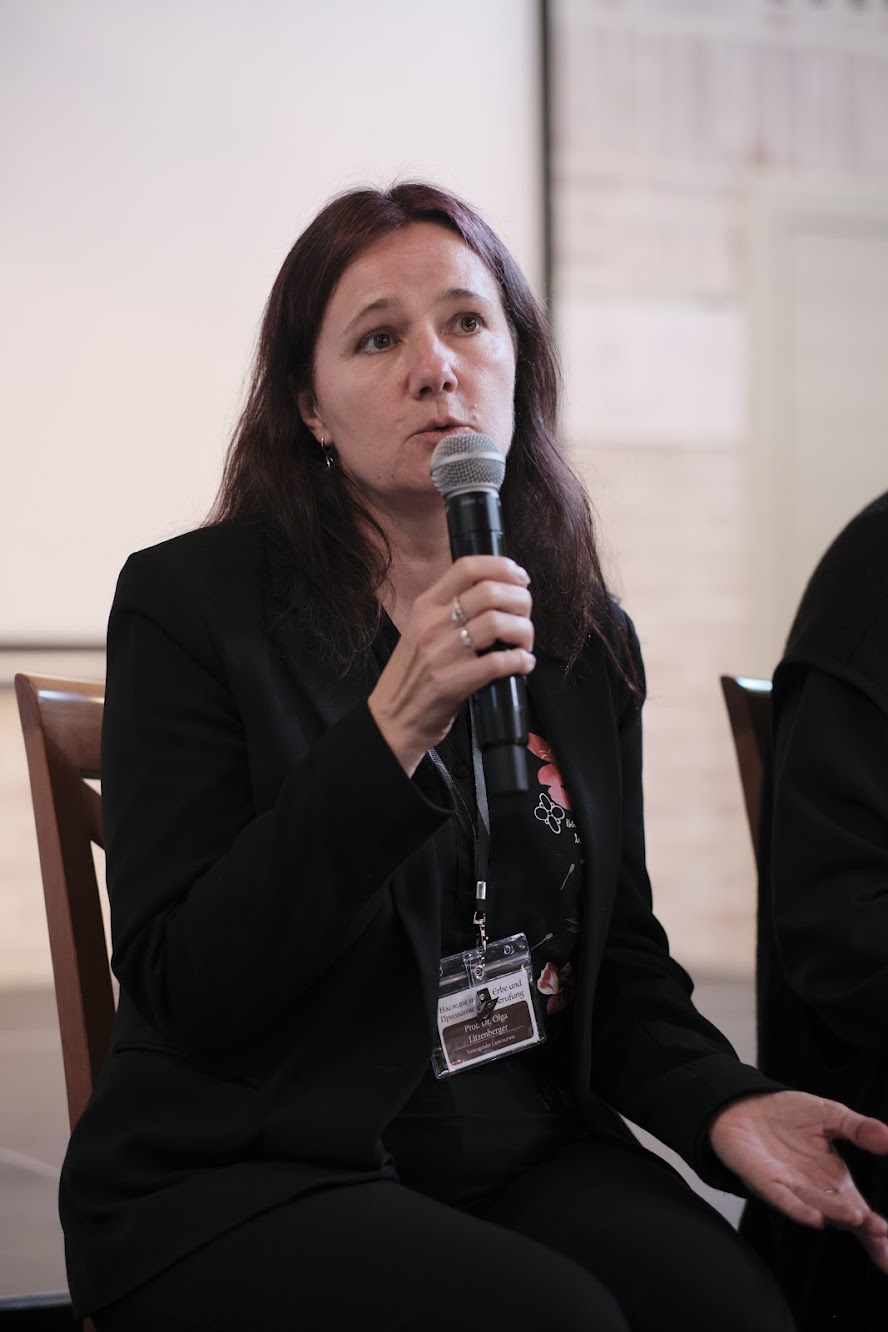
Professor Dr. Olga A. Litzenberger presented a paper entitled “Russian Germans in the Parishes of the German Diocese: Identity and Confessional Evolution.” Her research examined the formation of parishes during the 1990s and the cultural characteristics of the new immigrants arriving in Germany through the program for late resettlers.
Another substantial contribution came from Archpriest Alexander Bertash of the Berlin-German Diocese of the Moscow Patriarchate. His paper, “Two Centuries of Russian Church Architecture in Germany: From the Imperial Era to the Present,” introduced participants to the history of planning and constructing Orthodox churches on German soil and illustrated the development of Orthodox life through the architecture of these sacred buildings.
Bishop Job of Stuttgart then returned to the podium with a presentation devoted to the history of German translations of Orthodox liturgical texts. He demonstrated that this tradition was shaped largely through the efforts of outstanding individual translators, from Archpriest Alexei Maltsev and the Catholic Franciscan Kilian Kirchhoff to Archpriests Sergius Heitz, Dimitry Ignatiev, Peter Plank, Archimandrite Justin, and the contemporary translation commissions of the Orthodox Church in Germany.
Bishop Job, himself a member of the translation commission chaired by Metropolitan Mark, discussed the various approaches adopted by these translators: Maltsev’s archaizing and explanatory style, Kirchhoff’s poetic freedom, the practical pastoral clarity of Archpriests Sergius Heitz and Dimitry Ignatiev, and the philological precision and terminological consistency sought by contemporary monastic translators and the commission of the Orthodox Episcopal Conference in Germany.
He concluded that a fully developed German Orthodox liturgical tradition is still in the process of formation and that its future depends upon a synthesis of three principles: fidelity to the original texts, clarity of the German language, and practical usability in parish and monastic worship.
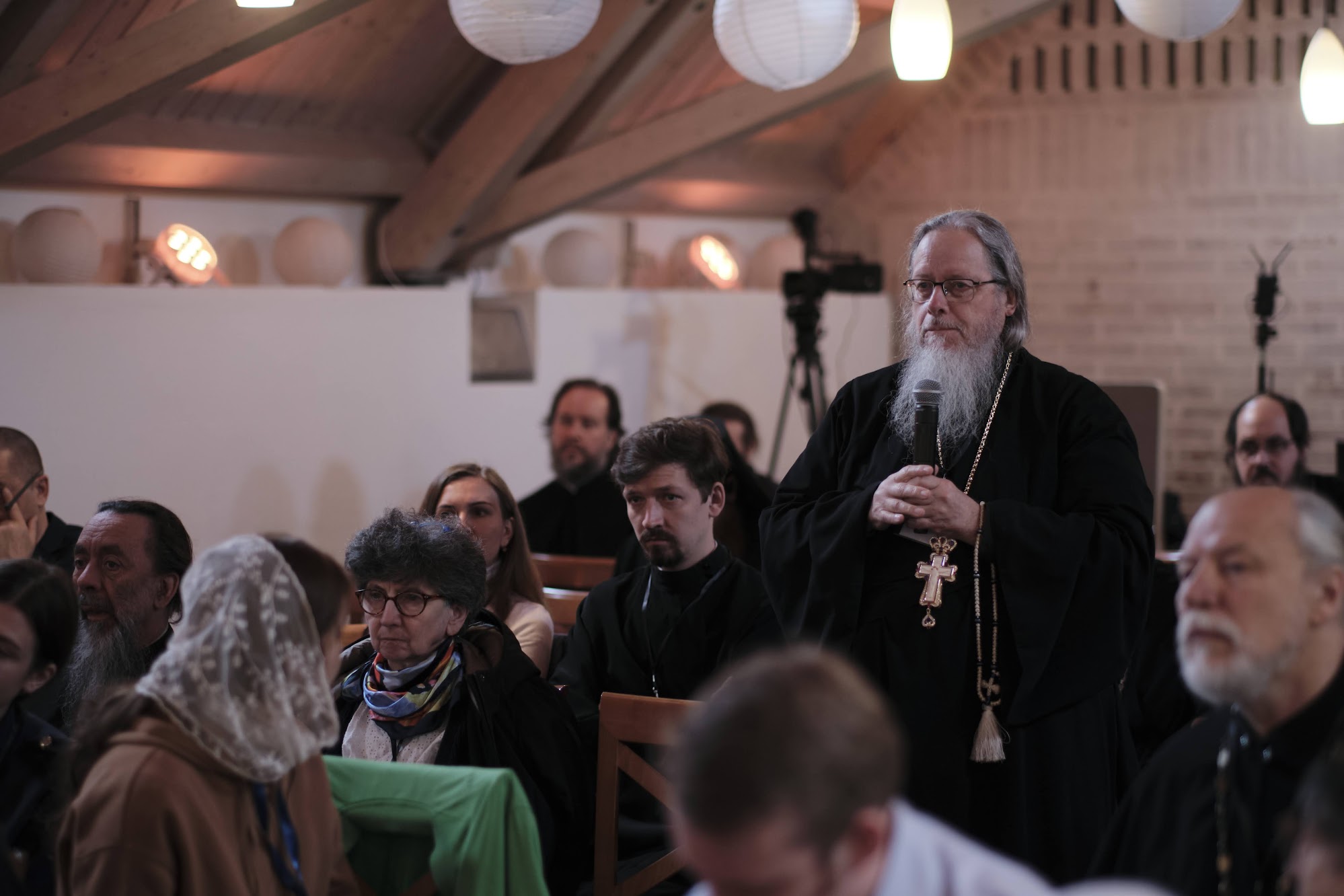
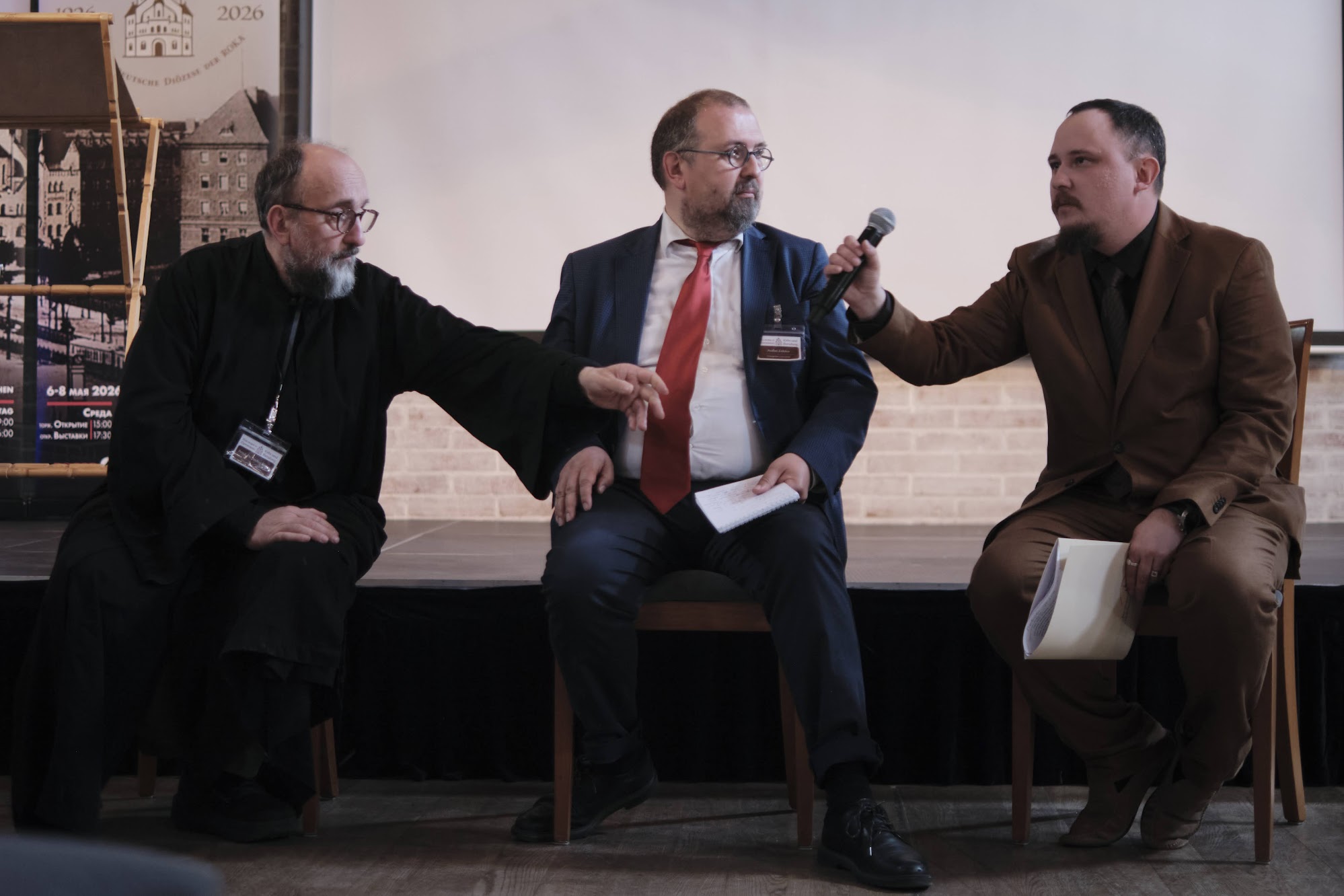
The conference concluded with a panel discussion entitled “German or Russian Orthodoxy in the West?” Participants included Archpriest Professor Stephanos Athanasiou, Cornelia Hayes, Johannes Wolf, and Archpriest Nikolai Artemoff.
The question was posed not as a contrast between competing identities but as an invitation to deeper reflection on the nature of ecclesiastical identity itself. Participants considered whether Orthodoxy in Germany can remain faithful to the spiritual tradition inherited from Russian Orthodoxy while at the same time becoming genuinely accessible through the German language, Germanculture, and the participation of people who do not come from a Russian émigré background.
At the heart of the discussion was the conviction that authentic ecclesial identity cannot be reduced to ethnicity, language, or cultural form. Rather, it is found in fidelity to the Orthodox faith, divine worship, Holy Tradition, and the life of the ecclesial community.
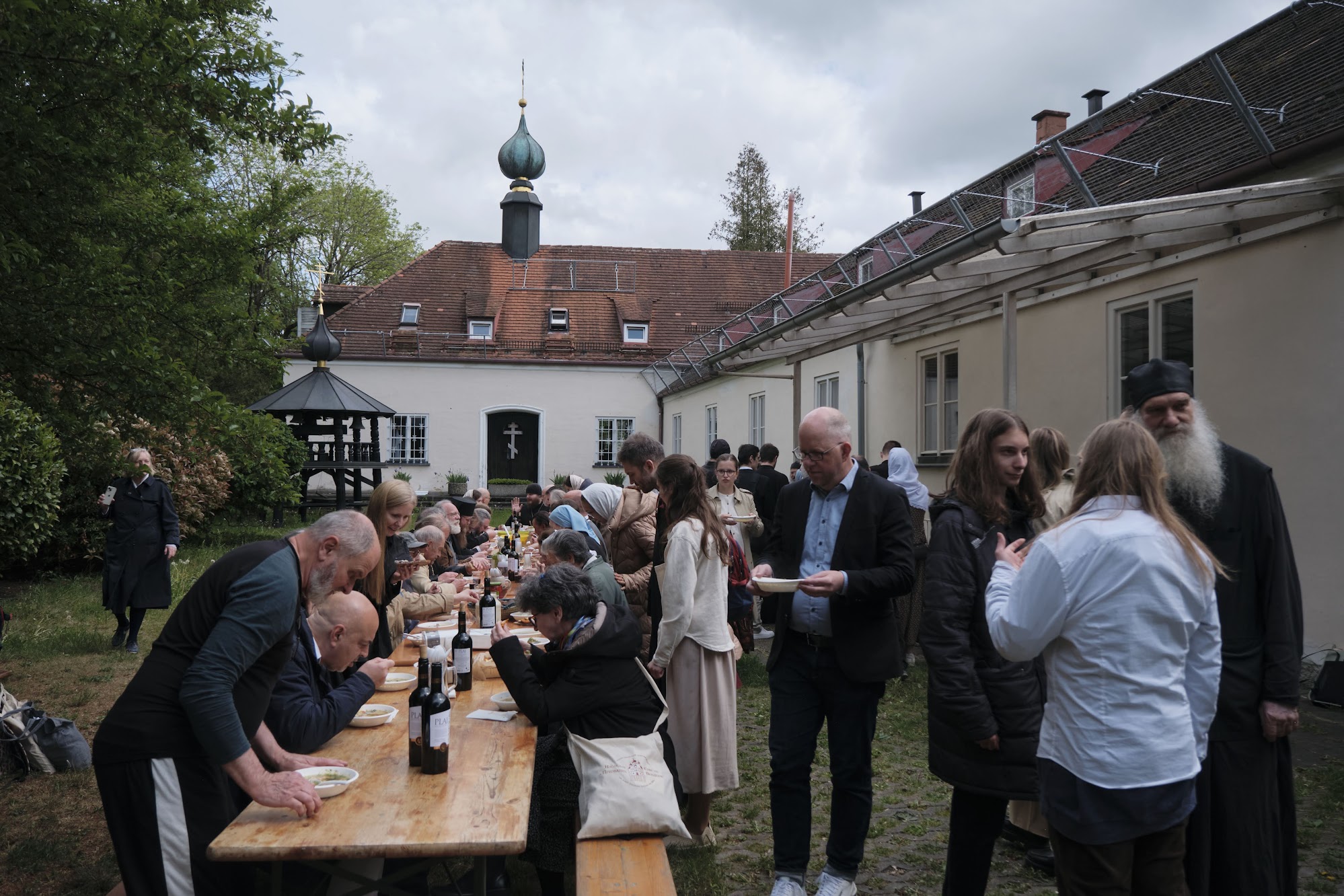
The atmosphere of the conference combined academic seriousness, lively discussion, and genuine brotherly fellowship. Throughout the historical presentations and conversations, one central theme continually emerged: church history has meaning only insofar as it leads to living faith, repentance, responsibility, and holiness.
Participants identified several important challenges facing the future of the German Diocese and of Orthodoxy in Germany more broadly. These included the preservation of the spiritual heritage of the Russian Church Abroad, the development of missionary work, the formation of clergy and church workers, the strengthening of theological education, the cultivation of a German-speaking Orthodox environment, and a more active public and pan-Orthodox presence within German society.
These discussions demonstrated that the jubilee conference was directed not only toward the past but also toward the future of church life.
The Munich conference became more than an anniversary celebration. It offered a rare example of how ecclesiastical memory can be united with serious historical scholarship, brotherly communion, and reflection on the future of Orthodoxy in Europe. It demonstrated that the centennial of the German Diocese is not merely a completed historical milestone but also a call to continued ecclesiastical witness: to preserve the tradition, to reflect honestly and responsibly upon the past, to strengthen parish life, and to bear witness to Orthodoxy within contemporary German society.
In the broader context of the history of the Russian Orthodox Church Outside of Russia, whose centennial was commemorated in 2021, the conference of the German Diocese was not merely a diocesan event but one of significance for the Church Abroad as a whole. The historical questions and contemporary challenges discussed at the conference are relevant not only to Germany, but to the entire Russian Orthodox Church Outside of Russia.
Photos by Mikolaj Dadela
|